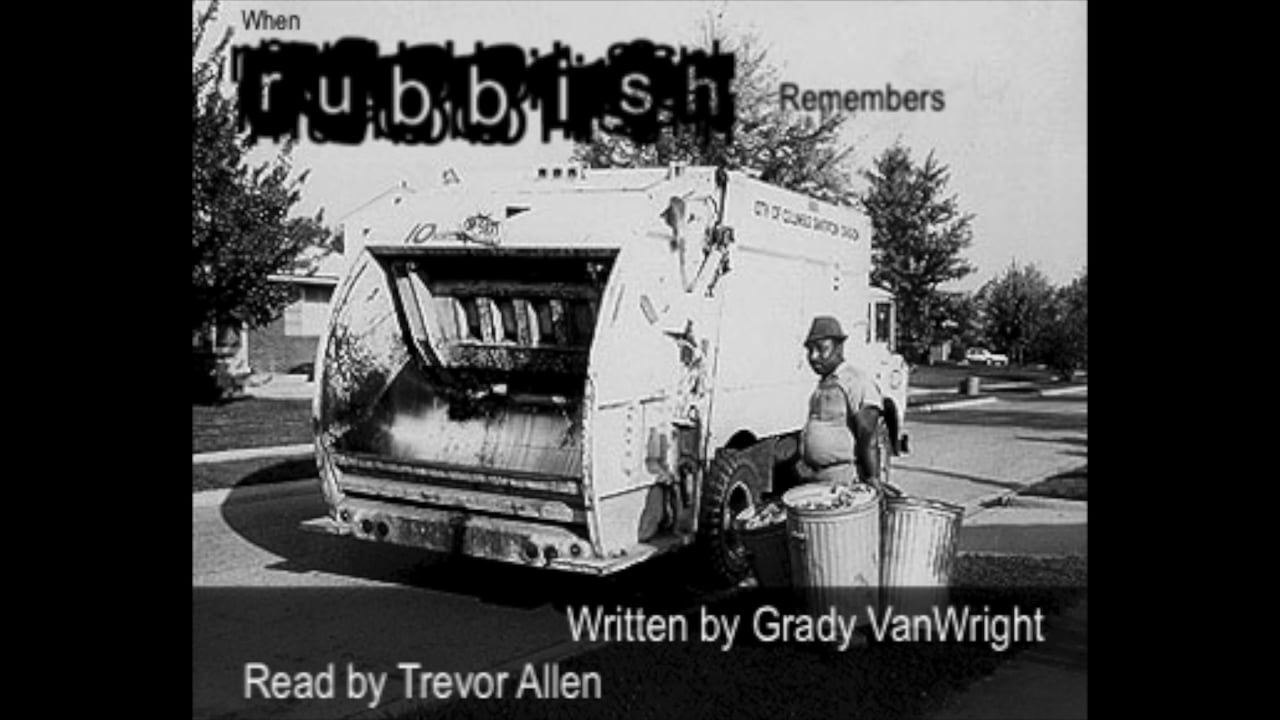
1982, suburbia. A man lifts what others forget.
They called him trash man.
Nothing new about it.
He’d driven the same route since ’74—
left on Belneath, right on Crestmont,
past the church with the sign that never changed.
Sin. Repent. Repeat.
The truck grumbled like a dog with bad hips.
Kids on bikes gave wide arcs.
Some waved.
Some didn’t.
He nodded to each,
as if remembering
every one of their cereal boxes.
Mrs. Langston’s trash smelled like lilac.
Inside: expired Lean Cuisines,
cigarette stubs,
a bottle of gin
in a Cool Whip tub.
Elegance sometimes covers
a lot of rust.
The O’Donnells were loud about being Catholic.
He knew their sins by weight—
beer bottles, Sunday fliers,
and once
a busted statue of Mary
in three clean breaks.
Old man Briggs never waved.
Lived alone
except for Duke.
One week: no dog food.
Two: the bowl gone.
Three: a leash, cut in half.
Trash says more than tombstones.
There were love letters once—
tied with yarn,
tossed from the Petersons.
He didn’t read them.
But he touched the paper—
soft like a neck,
forgotten by hands
that once knew the shape.
Kids threw rocks on Westover.
Laughed like they owned the world.
One would sell cars.
One would die wrapped around a pole.
He knew—
not from the trash,
but from how fast they laughed.
Summer brought sweat and sour milk.
Trash was heavier, meatier.
He never wore cologne.
Didn’t want to smell
like anything but effort.
Mrs. Gutierrez said hi
and left tamales on Christmas.
Her bags were careful—
neatly tied, double-knotted.
As if shame couldn’t survive
under order.
Once, a goldfish
in a jar of grape jelly.
No note.
No symbolism.
Just the kind of thing
you find in a place
where people lose track of what they love.
The preacher on Southbank
never tossed Bibles.
Just Marlboros,
and a birthday card
signed with love
to someone else’s wife.
Lawn chairs cracked.
Covers curled in sun.
VCR boxes blinked
in their cardboard graves.
Sears catalogs
dog-eared on the lingerie pages.
He didn’t judge.
He just loaded.
Everyone said hi
after garbage day.
Said things like,
“Hot one, huh?”
Like they hadn’t just fed him
their secrets in Hefty bags.
One kid drew him—
crayon lines, wide-ruled paper.
Big muscles.
Cape.
“Garbage Man Saves the Day”
written with backward R’s.
He kept it
in the glove box.
And sometimes
when the days ran long,
he looked at it again—
belief with no name.
Most didn’t think twice.
Trash out by six.
Pickup by nine.
They never noticed
what he noticed.
Never felt the weight
he lifted on their behalf.
He never talked about it.
Not to his wife.
Not to the bar.
It was a quiet sort of knowing,
the kind that bruises
when named.
And always,
the truck roared on.
Like it knew.
Some days, he hated it.
The smell.
The heft.
The fact that even dog food
has a shelf life
but people keep
lying to themselves.
Other days—
he felt like a priest,
cleaning the altars
after everyone had gone.
Trash as sacrament.
Silence as gospel.
He once kept a broken rosary
found in a bag of pork rinds.
Didn’t know why.
Just felt wrong
to let it go.
He tossed it all in the truck.
Sins.
Snack wrappers.
Wounds.
Yogurt cups.
Drove it to the dump
like hauling the soul
of a place too tired to weep.
And when he was done,
he didn’t bless himself.
Just washed his hands
and went home.
His work
wasn’t holy.
But it was honest.
And that
was enough.